

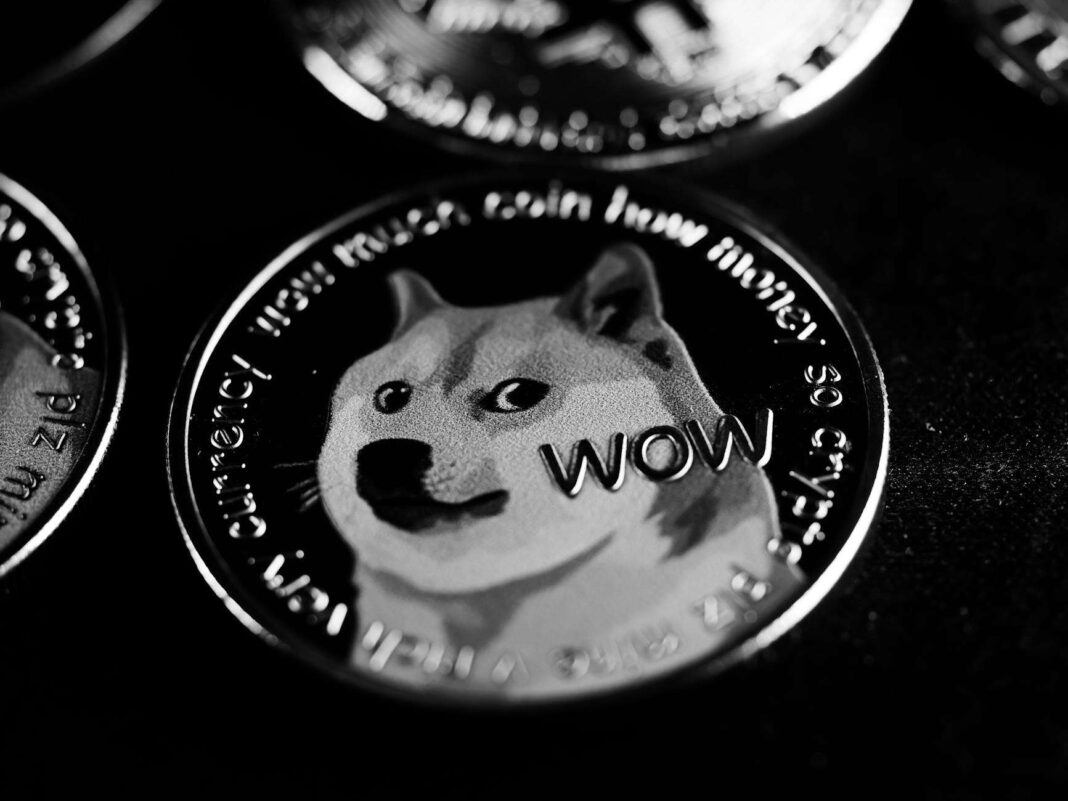
You know, when Shiba Inu (SHIB) first exploded onto the scene about three years ago, I almost dismissed it as pure internet nonsense. It felt like a joke coin, right there alongside Dogecoin, born from a meme and fueled by sheer social media hype. I remember seeing a friend throw $500 into it during that initial massive run-up, and honestly, watching his portfolio gain 300% in a week felt less like investing and more like gambling at a digital casino.
The core concept behind Shiba Inu is deceptively simple: it’s an ERC-20 token built on the Ethereum blockchain positioning itself as the “Dogecoin killer.” It launched anonymously in August 2020 by someone calling themselves Ryoshi. That’s a massive red flag professionally, but it’s also part of the crypto rebel appeal that draws so many people in.
This whole ecosystem isn’t just one coin, though. They’ve pushed out a whole slew of things, trying to build utility beyond just being a fun token. You’ve got LEASH, which is supposed to be scarce, and BONE, which acts as the governance token for their decentralized exchange, ShibaSwap. I seriously spent nearly an entire afternoon trying to figure out where my LEASH tokens had gone after staking them years ago; the interfaces aren’t exactly intuitive for the average user, which is a huge barrier to entry.
People want to know if they can still get ridiculously rich off this thing, which is a fair question, considering that during its peak notoriety, early investors saw returns measured in the thousands of percent. Well, the market cap has stabilized significantly since those wild days. You’re not going to turn $100 into a million dollars overnight anymore; those days are likely behind us unless Bitcoin or the overall market flips into a mania we haven’t seen since 2021.
One of the most fascinating, and frankly annoying, things about SHIB is its massive circulating supply—we’re talking about supplies in the hundreds of trillions. To achieve a price point even near $1.00, the required market capitalization would outstrip the value of nearly every major corporation on Earth combined. That’s why everyone obsesses over token burns, mechanisms designed to permanently remove SHIB from circulation. Developers have tried burning billions of tokens at a time, often through specific transaction fees or dedicated burn portals, but with supplies this high, the impact feels like trying to empty the ocean with a teaspoon. Learn more about how tokenomics work for high-supply assets over at Investopedia.
The hope for Shiba Inu investors now hinges heavily on the success of Shibarium. This is their dedicated Layer-2 scaling solution built on Ethereum, meant to significantly lower transaction costs and increase speed for the entire Shiba ecosystem. If Shibarium truly takes off and attracts major decentralized application (dApp) development that uses SHIB for gas fees—think small fractions of a penny instead of high Ethereum gas rates—that could create actual, sustained demand. Reports suggest Shibarium has processed millions of transactions since its launch, which is great, but the real test is whether developers choose it over, say, Polygon or other established L2s.
It’s critical to understand the current landscape. While SHIB is technically listed on every major exchange, its intrinsic value proposition still lags compared to projects solving complex infrastructure problems, like Ethereum or even Solana. It remains highly correlated with broader market sentiment; if Bitcoin takes a dip, SHIB usually crashes harder, which is a classic characteristic of high-beta, speculative assets. You can check the general volatility metrics on sites like CoinMarketCap.
From my perspective, the primary limitation of Shiba Inu is its dependence on branding and community fervor over proprietary technology. Remember when they tried to launch that NFT collection, Shiboshis? It was fine, but it didn’t fundamentally alter the trajectory of the coin because the broader foundation—the utility—wasn’t fully baked. You’re buying into a powerful tribe, not necessarily a groundbreaking technical protocol. I genuinely thought the Tyson Fury partnership would boost legitimacy more than it seems to have, but it just proves hype can only push you so far without foundational engineering.
So, can it still make you rich? Maybe, but it’s going to require patience, a strong stomach for volatility, and a major breakthrough from the development team to solidify Shibarium’s role in the decentralized finance space, according to analyses from sources like Forbes. If you’re chasing the next 1000x return, you’re probably better off researching obscure pre-sale tokens; this one is too established and too massive for those kinds of astronomical leaps now. Frankly, I’d rather bet on a well-organized community than a poorly disguised stablecoin any day of the week.